5 min Refrigerator Repair
Viking refrigerator running constantly in the Phoenix heat
A built-in that never cycles off is not always a failing compressor. What constant running means, the four checks worth doing in a Phoenix kitchen before you call anyone, and the point where it stops being maintenance.
Written by
Jonas Eriksson
Service technician — doors, hinges and alignment · 20 years in the trade
A Viking built-in that runs without stopping is telling you something specific, and it is not always the worst thing. In a Phoenix kitchen in June, a refrigerator has to reject heat into a room that may already be at 80°F, through a condenser that may be coated in a season of dust. That combination extends run times on a perfectly healthy machine. The difference between a long cycle and a machine that never cycles is the whole diagnosis, and it is something you can establish yourself before anybody drives out.
What “running constantly” actually means
Start by separating two symptoms that get reported as one. The first is a long run time: the compressor and condenser fan run for forty minutes, stop for five, and start again. The second is continuous running: nothing stops at all, for hours, and the interior temperature still sits above what you set. Only the second one is a fault in its own right.
The check is dull but decisive. Note the temperature the display shows, note the time, and come back every hour for a day. If the number reaches the setpoint at any point and the noise stops, the sealed system is doing its job and you are looking at a load or an airflow problem. If the reading never gets there, the machine is losing the argument with the heat and there is a reason.
Listen for what stops as well as what runs. On most built-in Viking refrigeration the condenser fan and the compressor run together; the evaporator fan inside cycles on its own schedule and pauses during defrost. A machine where the compressor never rests but the interior fan has gone quiet is a different problem from one where everything runs permanently.
The four things worth checking before you call
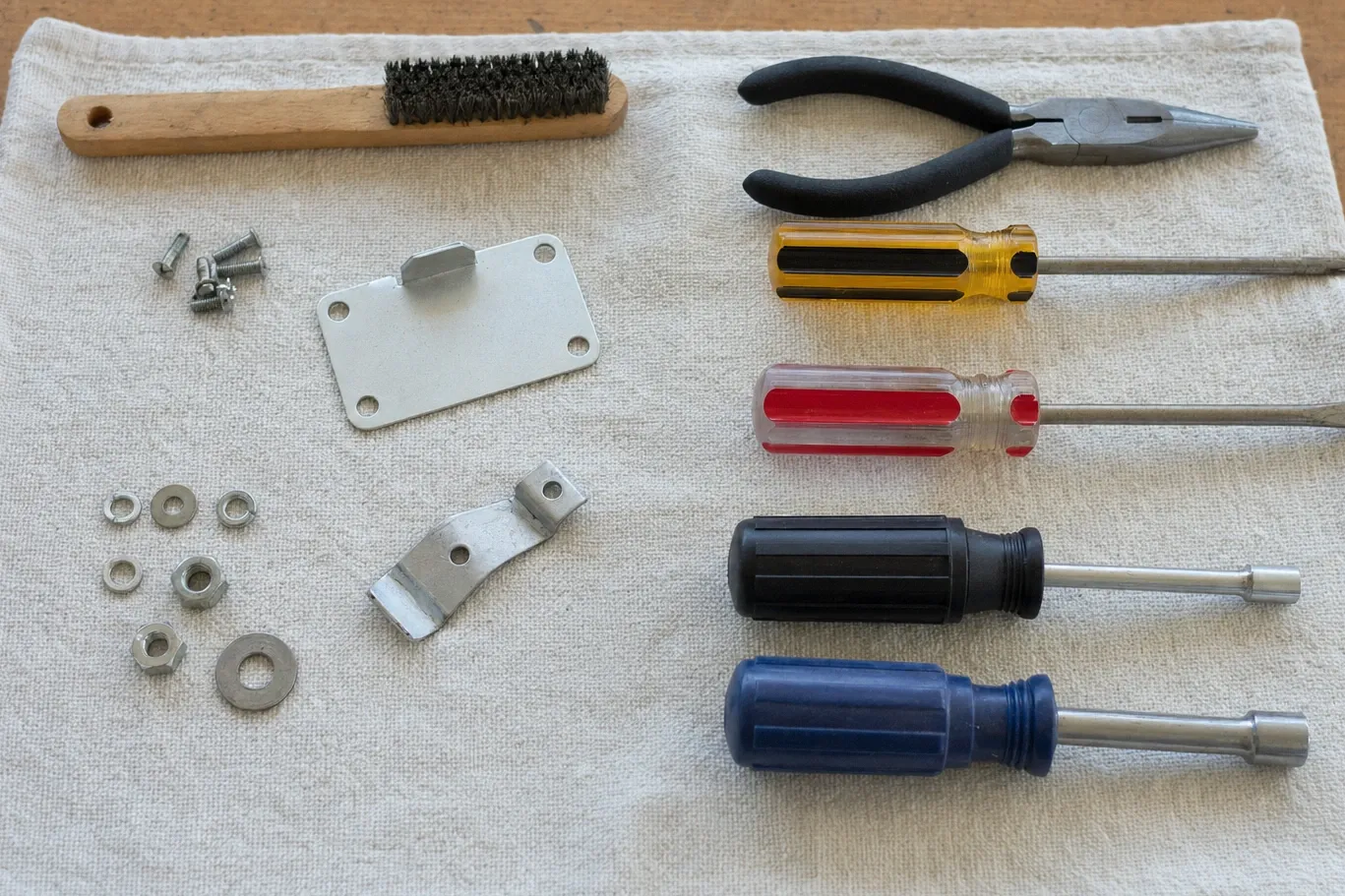
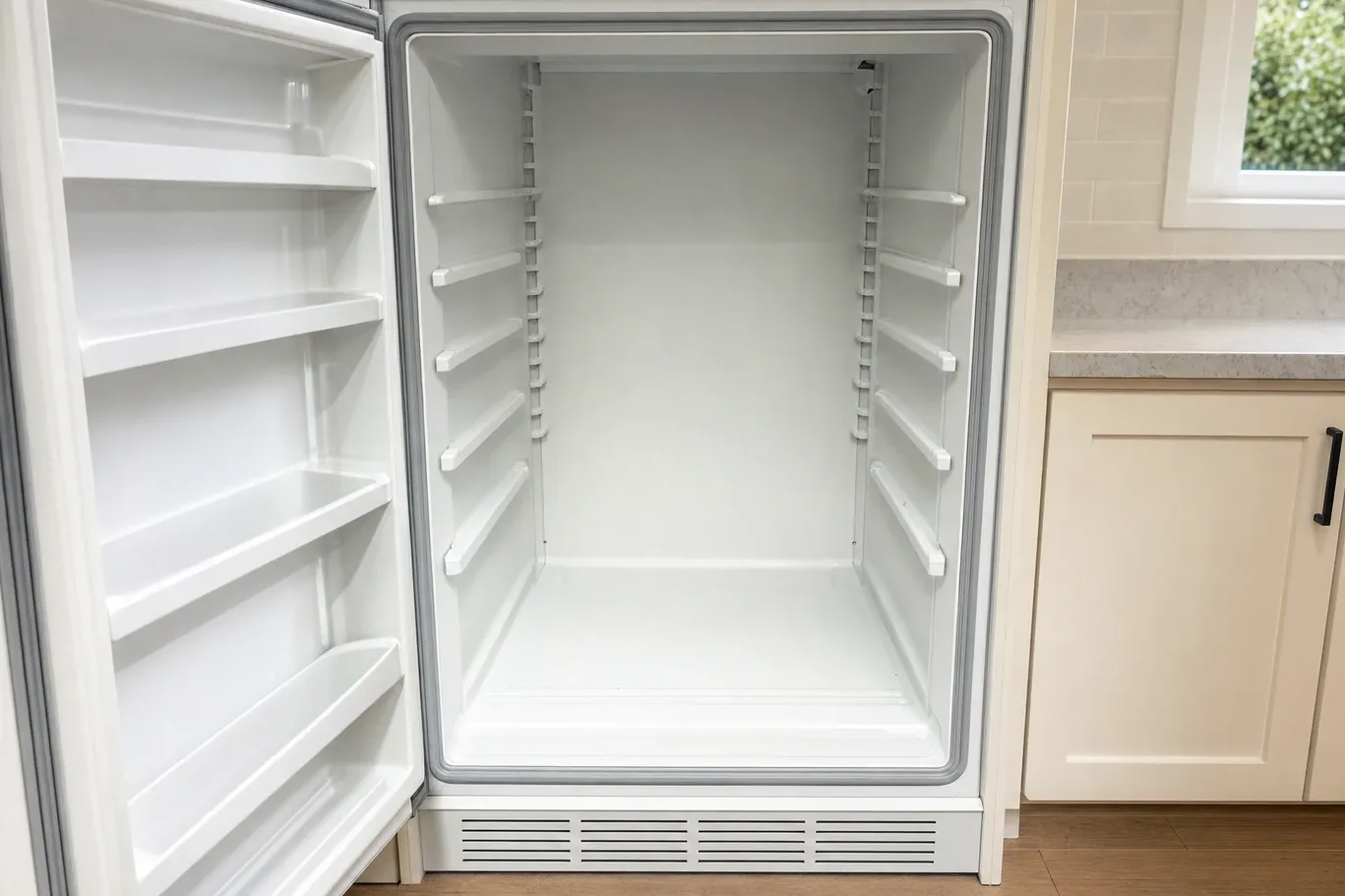
The condenser coil. This is the one that pays for itself. On most built-ins the coil sits behind the base grille or up at the top of the cabinet depending on the model generation. Dust, pet hair and the fine grit that gets into every Phoenix house pack the fins solid. A packed coil cannot dump heat, so the compressor runs on and the interior still drifts. Pull the grille, vacuum the fins in the direction they run, and use a soft brush rather than anything that will bend them.
The door seals. Take a strip of paper, shut it into the door, and drag it back out. Wherever it comes away loose the gasket has stopped gripping, and in a hot kitchen the machine is then chilling the room through that gap. Work the whole perimeter, especially the hinge side of a heavy door and the bottom corners of a freezer drawer.
The interior airflow. Boxes pushed against the rear vents, or a freezer packed to the back wall, stop cold air circulating. The sensor then reads cold air that has nowhere to go while the shelves stay warm, and the machine keeps running to satisfy a compartment it is not actually reaching.
What is around the cabinet. A built-in draws air through the grille and out again, and it does not tolerate having that path blocked. A new floor that raised the toe kick, a rug pushed against the base, a cabinet panel refitted a little tight after a remodel — all of those show up as constant running weeks after the work that caused them.
When it is the condenser, and when it is the sealed system
If the coil is clean, the seals are good and it still never stops, the next question is whether heat is being moved at all. A condenser that is hot along its whole length after a long run is rejecting heat, which points at load, airflow or a control fault. A condenser that is barely warm while the compressor hums is not moving heat, and that is a sealed-system conversation: a refrigerant charge problem, a restriction, or a compressor that is running but no longer pumping.
The condenser fan is worth its own look. A motor with a dry bearing turns slowly, or starts and stalls, and a slow fan produces exactly the same symptom as a dirty coil — the compressor runs and runs because the heat is not going anywhere. On a hillside house that takes in a lot of dust, a tired fan and a packed coil usually turn up together.
Frost is the other useful tell. A thick even coat of frost on the evaporator, behind the rear panel of the freezer, means the defrost cycle has stopped working: the heater, the thermostat or the control. The machine then runs continuously trying to pull heat through its own ice, and the fresh food side warms up while the freezer stays hard.
What the ambient temperature really does to a built-in
Every refrigerator has a design envelope, and a Phoenix kitchen sits at the top of it. Two things follow from that. First, marginal faults that a milder climate hides — a slightly low charge, a coil at half capacity, a gasket that seals everywhere but one corner — become visible here in summer and vanish again in November. If your machine ran without complaint all winter and started running non-stop in May, that pattern is information: it says marginal, not dead.
Second, a machine installed somewhere genuinely hot has less margin than the same machine in a conditioned room. A garage-side wall, a west-facing window with the afternoon sun on the cabinet, a cooktop hard against the enclosure — each of those raises the air the condenser has to work into. None of them are faults, but they change what “normal” looks like, and they are worth mentioning when you call.
When it is worth a call-out
Do the coil, the seals and the airflow first. They cost nothing, they are the single most common cause, and a technician who arrives to find a clean coil can move straight past it to the parts that need instruments.
Call when the interior will not reach its setpoint at all, when the compressor runs but the condenser stays cool, when the evaporator is iced over, when the condenser fan is slow or silent, or when the machine has been running continuously for more than a day. Those need a meter, a gauge set and a technician who works on this equipment regularly. Bring the model and serial number to the call — on a built-in it decides which parts fit, and it is often the difference between one visit and two.
Follow-up questions
-
Is it normal for a built-in refrigerator to run most of the day in summer?
Longer run times in July are normal; continuous running is not. A healthy built-in still reaches its setpoint and shuts the compressor off, even if the off periods get short. If it has not stopped once in twenty-four hours, something is either loading it or failing.
-
Will cleaning the condenser coil fix it?
It fixes a surprising share of them, particularly in dusty parts of the valley. A coil packed with lint and dust cannot reject heat, so the compressor runs on and the fresh food side still drifts warm. If a proper clean does not change the run time within a day, the fault is elsewhere.
-
Should I turn the temperature down to help it catch up?
No. A lower setpoint asks for more cooling from a system that is already failing to reach the setpoint it has, and on a sealed-system fault it simply runs the compressor harder for nothing. Leave the setting alone and note what the display actually reads.